
In today’s fast-moving digital world, traditional marketing is no longer enough to capture people’s attention. Audiences are constantly exposed to advertisements, social media posts, videos, blogs, and promotional content. Because of this, businesses need smarter and more creative ways to connect with their audience.
This is where Advanced Content & Creator Marketing becomes important.
Content is no longer simply about publishing blog posts or creating social media updates. Modern brands need strategic, valuable, engaging, and audience-focused content. At the same time, creators have become powerful voices in digital marketing. People often trust creators, influencers, experts, and communities more than traditional advertisements.
Advanced Content & Creator Marketing combines strategic content creation with the influence, creativity, and authenticity of digital creators. It helps businesses build stronger relationships, increase brand awareness, improve engagement, and create long-term digital growth.
In this blog, we will explore what Advanced Content & Creator Marketing is, why it matters, and how businesses can use it to build a stronger digital brand.
What Is Advanced Content & Creator Marketing?
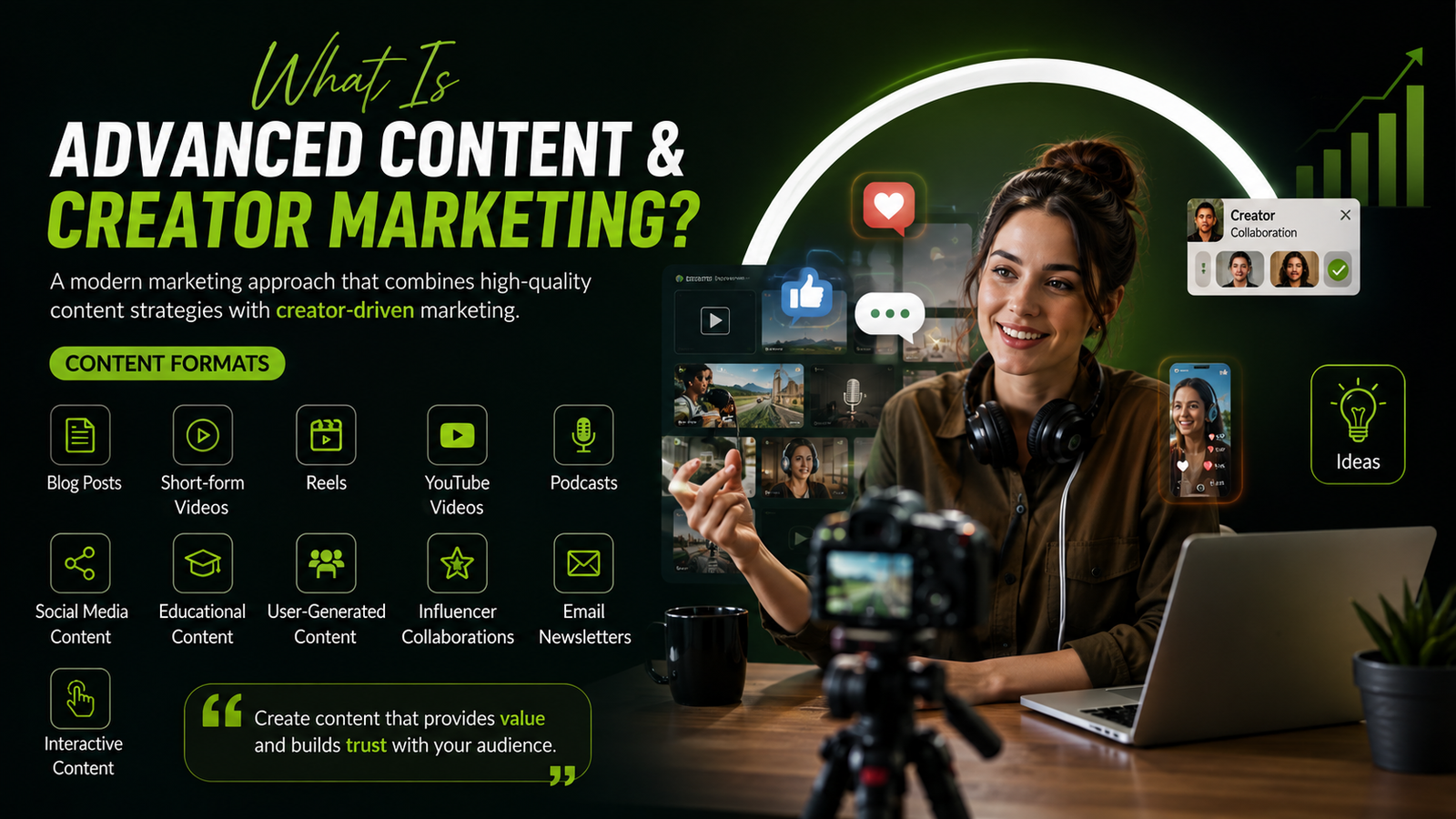
Advanced Content & Creator Marketing is a modern marketing approach that combines high-quality content strategies with creator-driven marketing.
Instead of simply publishing promotional content, businesses focus on creating meaningful experiences for their audience. They use different formats such as:
- Blog posts
- Short-form videos
- Reels
- YouTube videos
- Podcasts
- Social media content
- Educational content
- User-generated content
- Influencer collaborations
- Email newsletters
- Interactive content
Creators play an important role in this strategy. They can help brands communicate in a more authentic and relatable way.
For example, instead of a company simply saying that its product is excellent, a trusted creator can demonstrate how they use the product in real life. This type of content often feels more natural and believable to audiences.
The goal is not simply to promote products. The goal is to create content that provides value while building trust with potential customers.
Why Advanced Content & Creator Marketing Is Important
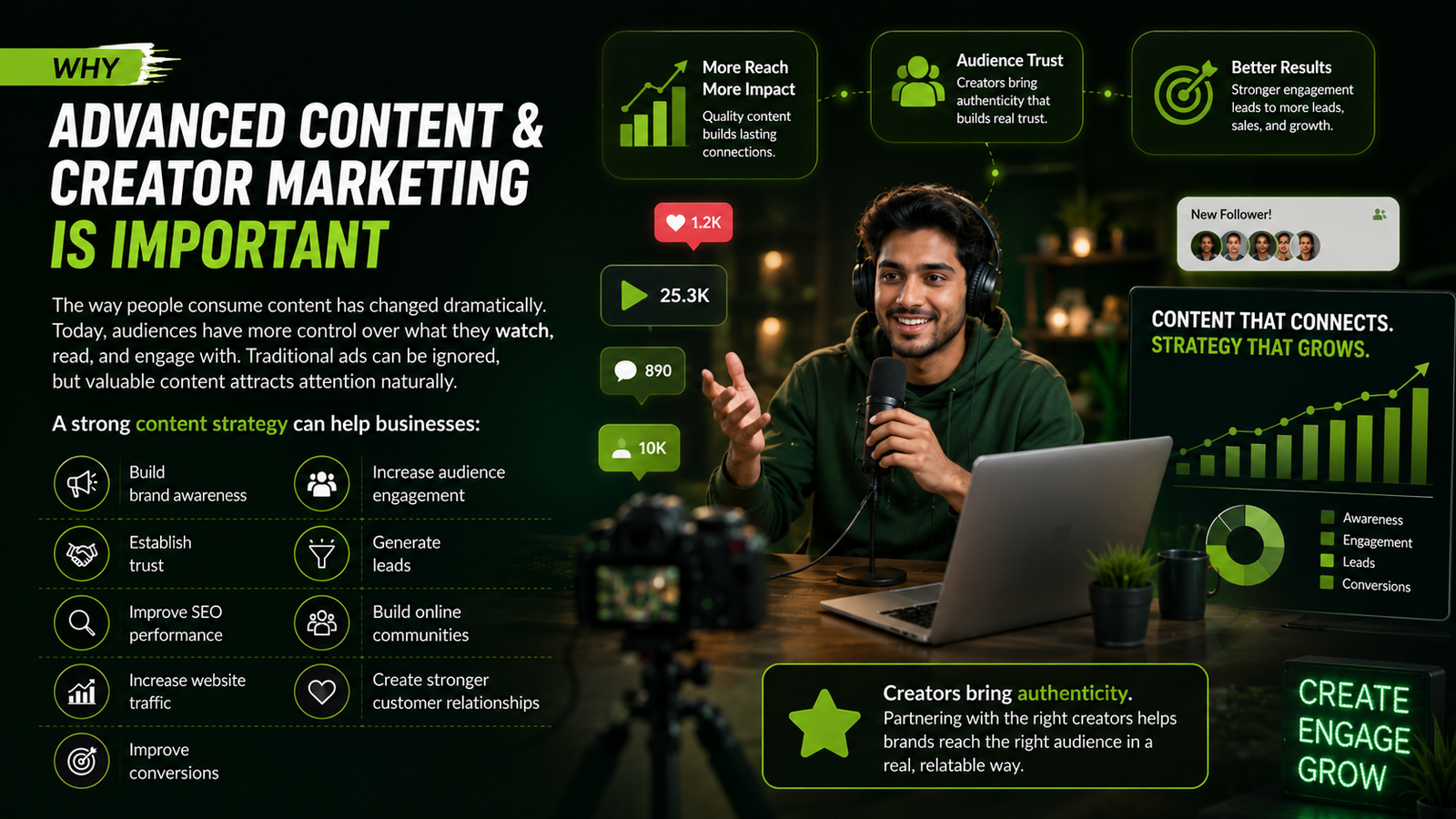
The way people consume content has changed dramatically.
Today, audiences have more control over what they watch, read, and engage with. Traditional advertisements can easily be skipped, ignored, or blocked. However, valuable and entertaining content can attract attention naturally.
This is one of the biggest advantages of Advanced Content & Creator Marketing.
A strong content strategy can help businesses:
- Build brand awareness
- Increase audience engagement
- Establish trust
- Generate leads
- Improve SEO performance
- Build online communities
- Increase website traffic
- Create stronger customer relationships
- Improve conversions
Creators add another important advantage: authenticity.
People often follow creators because they enjoy their personality, expertise, or content style. When creators collaborate with brands that match their audience, businesses can reach potential customers in a more natural way.
The Evolution of Content Marketing
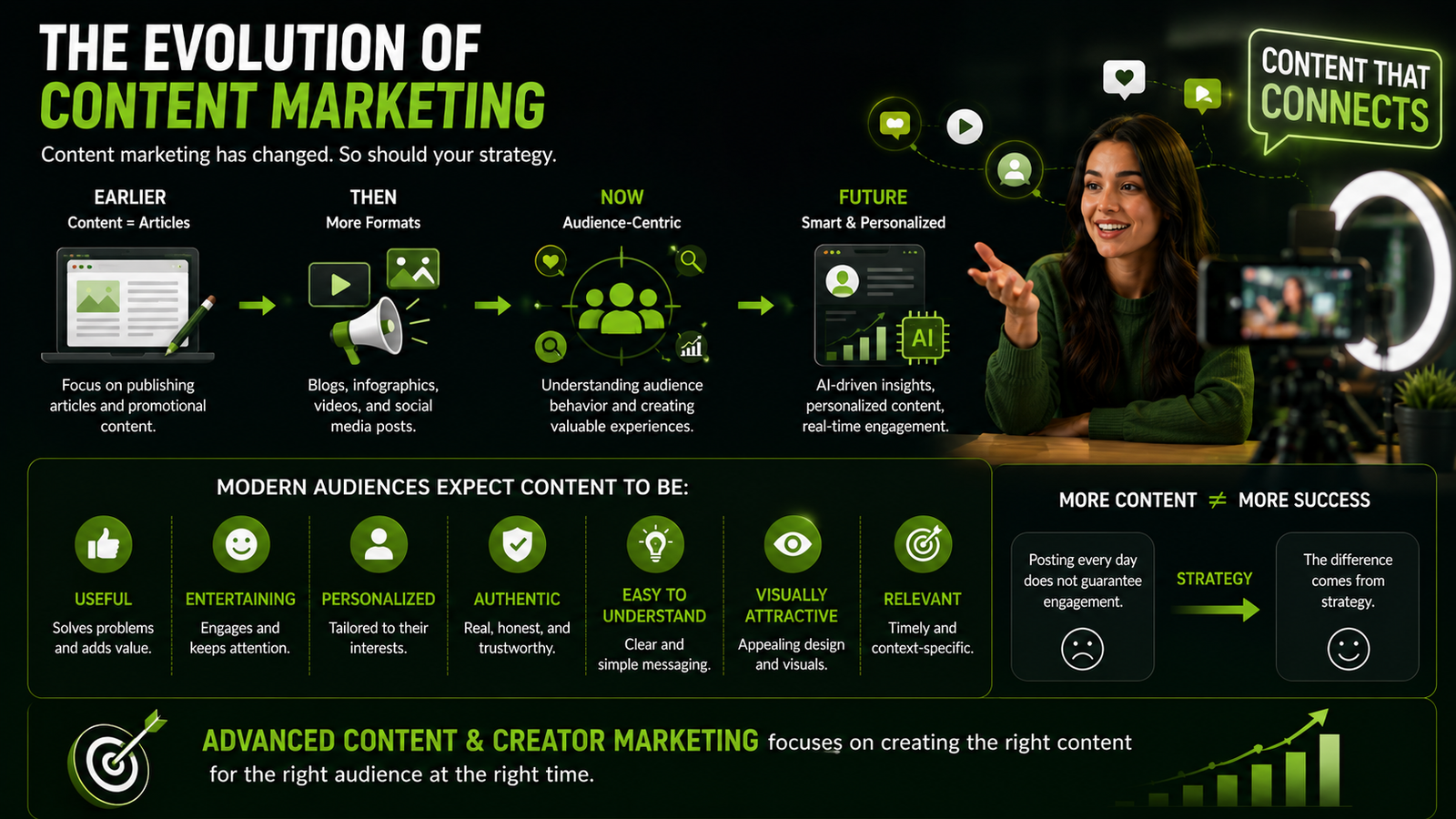
Content marketing has changed significantly over the years.
Earlier, businesses focused mainly on publishing articles and promotional content. Today, successful content marketing requires a much deeper understanding of audience behavior.
Modern audiences expect content to be:
- Useful
- Entertaining
- Personalized
- Authentic
- Easy to understand
- Visually attractive
- Relevant
This is why businesses need advanced strategies instead of simply creating more content.
Creating a large number of posts does not guarantee success. A business can publish content every day and still receive very little engagement.
The difference comes from strategy.
Advanced Content & Creator Marketing focuses on creating the right content for the right audience at the right time.
Understanding Your Target Audience
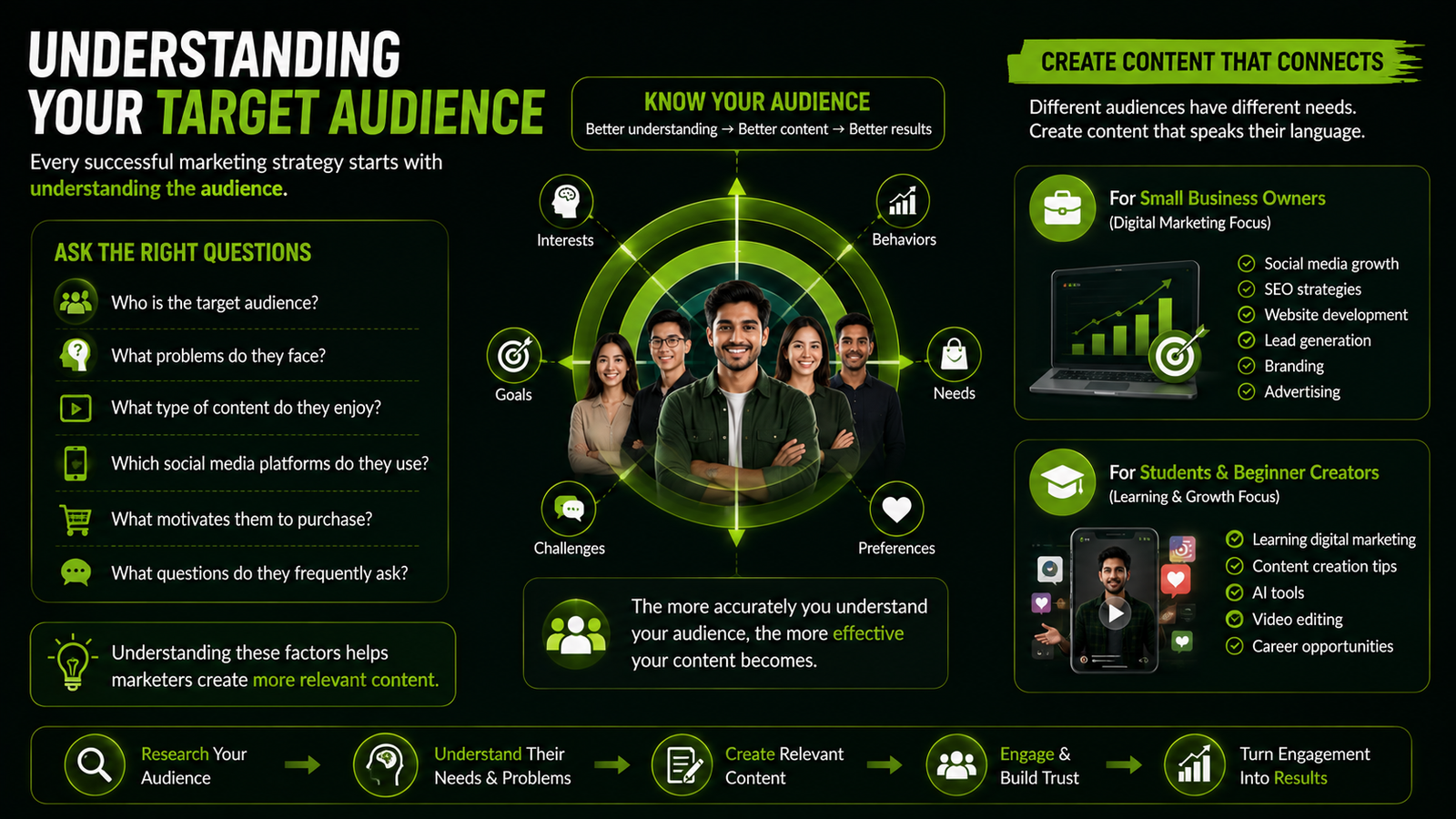
Every successful marketing strategy starts with understanding the audience.
Before creating content, businesses should ask important questions:
Who is the target audience?
What problems do they face?
What type of content do they enjoy?
Which social media platforms do they use?
What motivates them to purchase?
What questions do they frequently ask?
Understanding these factors helps marketers create more relevant content.
For example, a digital marketing professional targeting small business owners should create content about topics such as:
- Social media growth
- SEO strategies
- Website development
- Lead generation
- Branding
- Advertising
However, content created for students or beginner creators may focus more on:
- Learning digital marketing
- Content creation tips
- AI tools
- Video editing
- Career opportunities
The more accurately you understand your audience, the more effective your content becomes.
Creating a Strong Content Strategy
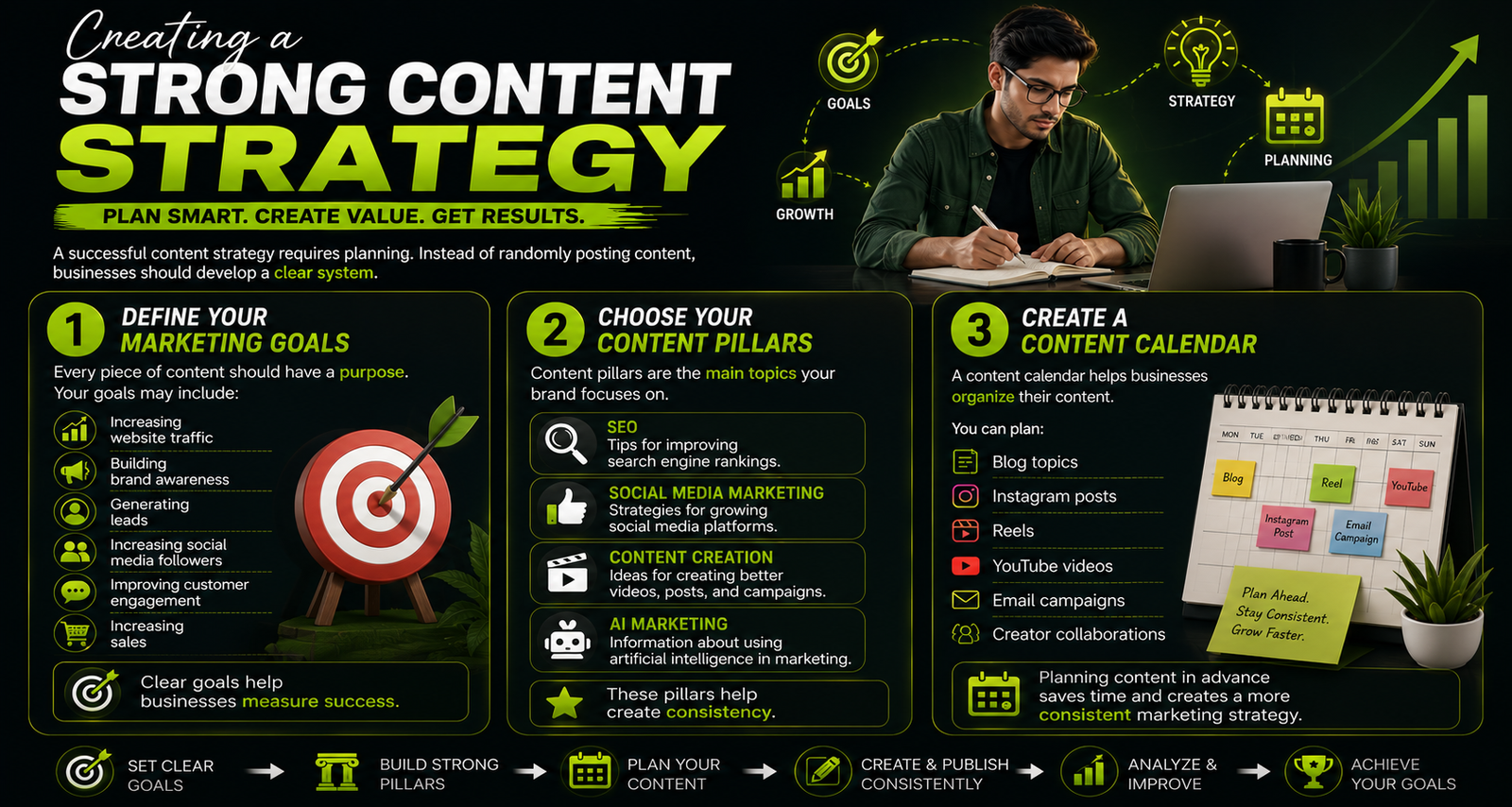
A successful content strategy requires planning.
Instead of randomly posting content, businesses should develop a clear system.
A strong strategy usually includes the following elements.
1. Define Your Marketing Goals
Every piece of content should have a purpose.
Your goals may include:
- Increasing website traffic
- Building brand awareness
- Generating leads
- Increasing social media followers
- Improving customer engagement
- Increasing sales
Clear goals help businesses measure success.
2. Choose Your Content Pillars
Content pillars are the main topics your brand focuses on.
For example, a digital marketer might create content around:
SEO
Tips for improving search engine rankings.
Social Media Marketing
Strategies for growing social media platforms.
Content Creation
Ideas for creating better videos, posts, and campaigns.
AI Marketing
Information about using artificial intelligence in marketing.
These pillars help create consistency.
3. Create a Content Calendar
A content calendar helps businesses organize their content.
You can plan:
- Blog topics
- Instagram posts
- Reels
- YouTube videos
- Email campaigns
- Creator collaborations
Planning content in advance saves time and creates a more consistent marketing strategy.
The Power of Creator Marketing
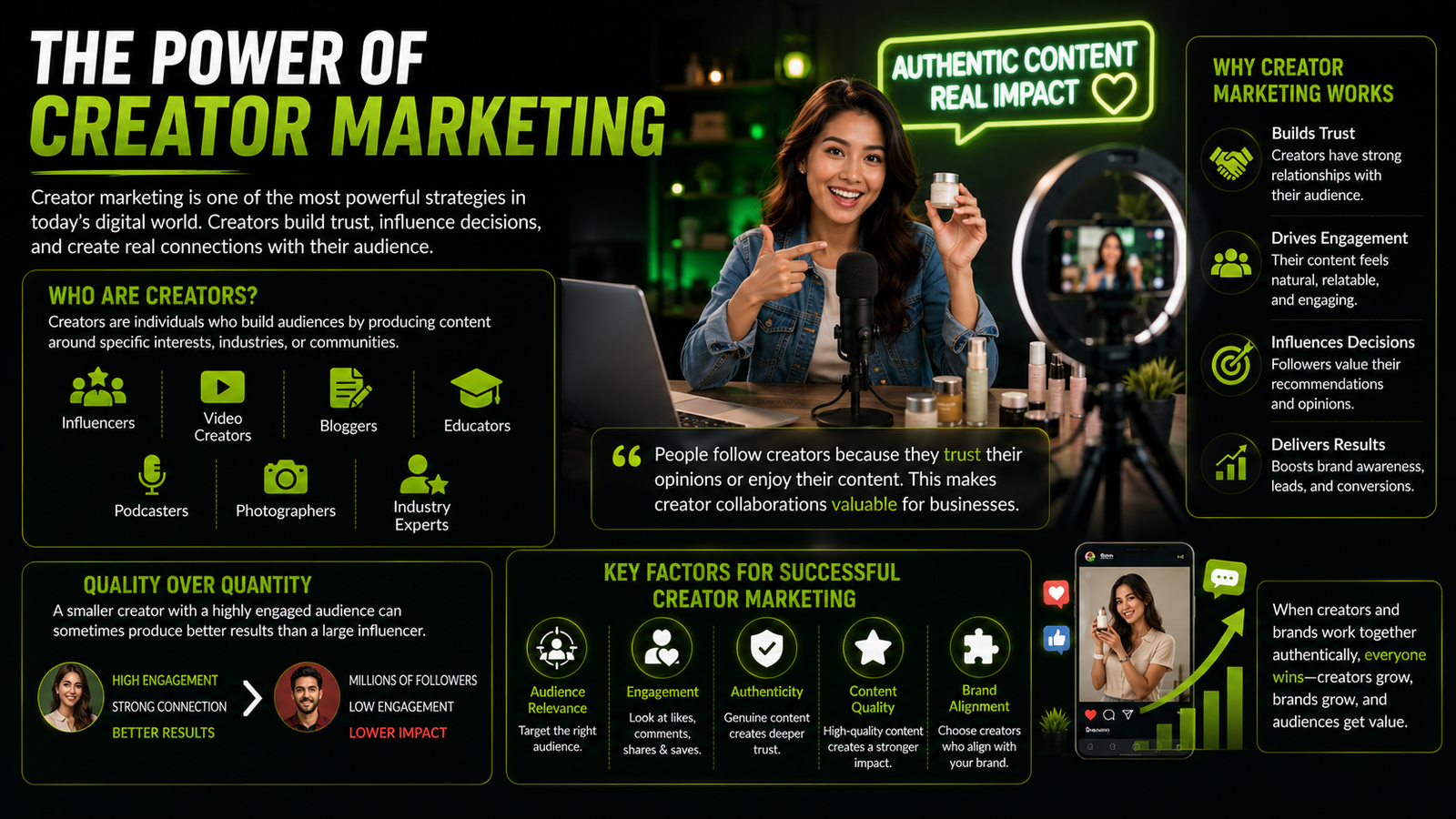
Creator marketing has become one of the most powerful parts of modern digital marketing.
Creators are individuals who build audiences by producing content around specific interests, industries, or communities.
They may be:
- Influencers
- Video creators
- Bloggers
- Educators
- Podcasters
- Photographers
- Industry experts
The biggest strength of creators is their relationship with their audience.
People follow creators because they trust their opinions or enjoy their content. This makes creator collaborations valuable for businesses.
However, successful creator marketing is not simply about choosing someone with millions of followers.
A smaller creator with a highly engaged audience can sometimes produce better results than a large influencer.
The most important factors include:
- Audience relevance
- Engagement
- Authenticity
- Content quality
- Brand alignment
Choosing the Right Creators for Your Brand
Choosing the wrong creator can damage a marketing campaign.
Businesses should carefully evaluate potential creators.
First, look at their audience.
Does their audience match your target customers?
For example, a fitness brand should collaborate with fitness creators rather than random entertainment influencers.
Second, analyze engagement.
A creator with 10,000 highly engaged followers may provide better results than someone with 500,000 followers and very low engagement.
Third, consider authenticity.
The best creator partnerships feel natural.
If a creator suddenly promotes a product that does not match their usual content, the audience may not trust the promotion.
Successful Advanced Content & Creator Marketing requires partnerships that feel genuine.
Short-Form Video and Modern Content Marketing
Short-form video has changed the digital marketing landscape.
Platforms have made short videos one of the most popular ways for people to consume content.
Videos can quickly communicate:
- Information
- Entertainment
- Stories
- Product demonstrations
- Tutorials
For businesses, short-form video provides an opportunity to reach audiences quickly.
A successful video does not always require expensive equipment.
A strong idea, clear message, and engaging presentation can often be more important.
Businesses can create videos such as:
- Educational tips
- Behind-the-scenes content
- Product demonstrations
- Customer stories
- Marketing tips
- Industry insights
Creators are especially effective in short-form video because they understand how to communicate naturally with their audiences.
Storytelling in Advanced Content & Creator Marketing
People remember stories more than advertisements.
Storytelling helps brands create emotional connections with audiences.
Instead of simply saying:
“Our product is the best.”
A brand can tell a story about how a customer solved a problem using the product.
Stories can include:
- Challenges
- Emotions
- Experiences
- Success
- Transformation
For example, a small business can share its journey from starting with a simple idea to building a successful brand.
This type of content makes the business feel more human.
Storytelling is one of the most important elements of Advanced Content & Creator Marketing because it transforms ordinary marketing messages into memorable experiences.
User-Generated Content and Community Building
User-generated content is content created by customers or community members.
Examples include:
- Customer reviews
- Product photos
- Videos
- Testimonials
- Social media posts
User-generated content is powerful because it provides social proof.
When potential customers see real people using and enjoying a product, they may feel more confident about purchasing it.
Businesses can encourage user-generated content by:
- Creating branded hashtags
- Running challenges
- Asking customers to share experiences
- Featuring customer content
- Creating interactive campaigns
Community building is also important.
Strong brands do not simply collect followers. They build communities.
A community gives people a reason to continue interacting with a brand.
Personalization and Audience Experience
Modern consumers expect personalized experiences.
Generic marketing messages are becoming less effective.
Businesses can improve their content strategy by creating content for specific audience segments.
For example, instead of creating one general article about digital marketing, a marketer could create separate content for:
- Small businesses
- Students
- Beginners
- Entrepreneurs
- Content creators
This makes the content more relevant.
Personalization can also be used in:
- Email marketing
- Website experiences
- Product recommendations
- Social media campaigns
The goal is to make audiences feel that the content was created specifically for their needs.
Using AI in Content and Creator Marketing
Artificial intelligence is becoming an important tool in modern marketing.
AI can help marketers:
- Generate content ideas
- Research topics
- Analyze audience behavior
- Create content outlines
- Improve productivity
- Repurpose content
- Analyze campaign performance
However, AI should not completely replace human creativity.
The best approach is combining human creativity with AI efficiency.
AI can help marketers work faster, but humans provide:
- Creativity
- Emotion
- Personal experiences
- Cultural understanding
- Original ideas
This combination can make Advanced Content & Creator Marketing more efficient and powerful.
Content Repurposing for Maximum Results
Creating new content constantly can be difficult.
Content repurposing allows businesses to transform one piece of content into multiple formats.
For example, one detailed blog post can become:
- Several Instagram posts
- A LinkedIn post
- A YouTube video
- Multiple short videos
- An email newsletter
- A podcast topic
This strategy helps businesses save time while reaching audiences across multiple platforms.
Different people prefer different content formats.
Some people enjoy reading blogs.
Others prefer watching videos.
Repurposing allows brands to communicate the same valuable message in different ways.
Measuring the Success of Your Content Strategy
Marketing decisions should be based on data.
Businesses should regularly measure the performance of their content.
Important metrics include:
- Website traffic
- Engagement rate
- Video views
- Watch time
- Click-through rate
- Lead generation
- Conversion rate
- Social media growth
However, businesses should not focus only on vanity metrics.
A post with thousands of views may not necessarily generate business results.
The most important metrics depend on your goals.
For example, if your goal is lead generation, focus on:
- Website clicks
- Form submissions
- Email signups
If your goal is brand awareness, focus on:
- Reach
- Impressions
- Audience growth
Data helps marketers understand what is working and what needs improvement.
Common Mistakes to Avoid
Many businesses make mistakes when creating content.
Creating Content Without a Strategy
Random content rarely produces consistent results.
Every business should have clear goals and content pillars.
Focusing Only on Promotion
People do not want to see advertisements all the time.
Create educational, entertaining, and valuable content.
Ignoring Audience Feedback
Comments and customer questions provide valuable insights.
Listen to your audience.
Choosing Creators Only Based on Followers
Follower count is not everything.
Focus on audience relevance and engagement.
Copying Competitors
Learning from competitors is useful, but copying them will not create a unique brand.
Develop your own voice and creative identity.
The Future of Advanced Content & Creator Marketing
The future of marketing will become more personal, interactive, and creator-driven.
Businesses will continue to invest in:
- Creator partnerships
- AI-powered content tools
- Short-form video
- Interactive experiences
- Community building
- Personalized marketing
Creators will become even more important because audiences value authenticity.
At the same time, technology will make content creation faster and more efficient.
The brands that succeed will be those that balance technology with human creativity.
The future is not simply about creating more content.
It is about creating better content.
Final Thoughts
Advanced Content & Creator Marketing is changing the way businesses communicate with their audiences.
Successful marketing is no longer about simply promoting products. Modern brands must educate, entertain, inspire, and build relationships.
A strong content strategy combined with authentic creator partnerships can help businesses build trust and reach the right audiences.
The key is understanding your audience, creating valuable content, choosing the right creators, and continuously improving your strategy based on results.
Businesses should also take advantage of modern technologies such as AI while maintaining human creativity and authenticity.
The future belongs to brands that can create meaningful experiences rather than simply advertisements.
By using Advanced Content & Creator Marketing effectively, businesses can build stronger digital brands, develop loyal communities, and create long-term growth in an increasingly competitive digital world.